UNIST site map
- Admissions
-
Academics
- Colleges and Schools
-
Academic Affairs
- Academic Calendar
- Academic Curriculum
- Requirements for Graduation
- Browse Open Courses
- Undergraduate Administration
-
Graduate Academic Affairs
- Tuition Fee Payment
- Academic Leave of Absence/ Academic Return
- Voluntary Withdrawal/ Expulsion
- Change of Major
- Change of Degree Program/ Dropping of Degree Program
- Class Period/ Attendance Period/ Academic Year・Semester
- Course Registration
- Course Drop
- Attendance/ Grade/ Exam
- Credit Transfer/ Credit Carryover
- Academic Forms
- Education Support
-
Research/Industry
- Research Aims
- Research Findings
- Researcher Search
-
Research Organizations
- UNIST Multi-Interdisciplinary Institute
- IBS Research Groups
-
UNIST Labs
- Department of Mechanical Engineering
- School of Energy and Chemical Engineering
- Department of Civil
- Department of Materials Science and Engineering
- Department of Nuclear Engineering
- Department of Industrial Engineering
- Department of Design
- Department of Biomedical Engineering
- Department of Biological Sciences
- Department of Electrical Engineering
- Department of Computer Science and Engineering
- Department of Mathematical Sciences
- Department of Chemistry
- Department of Physics
- School of Business Administration
- Graduate School of Carbon Neutrality
- Graduate School of Artificial Intelligence
- Research Support
- University-Industry Relations
- Campus Life
- News Center
- About UNIST
-
etc
- UNIST Bulletin
- Work-Life Balance Support System
- UNIST Gender Equality Plan
- Faculty Invitation for Tenure Track
- Faculty Invitation for Non-Tenure Track
- Board Meeting Minutes
- University Council Meeting Minutes
- Administrative Service Charter
- Privacy Policy
- Copyright Policy
- Rejection of Unauthorized Email Collection
- Operation and Management Policy for Video Information Processing Devices
- Information Disclosure
SEARCH


Connection Points of Knowledge, Everything About UNIST
Try searching.
Recommended search terms


STUDENT


- portal
- U Academics Innovation Center
- Leadership Center
- Dormitory
- Academic Information Center
- International Students Support
- Browse Open Courses
- Course Registration
- Graduation Requirements for Graduation
- Academic Leave of Absence/ Academic Return
- Military Service
- Certificate Issuance
- Academic Calendar
- Scholarships
- Campus Map
- Campus Life Guidebook
- Health Care Center
- Human Rights Center
- portal
- Job Opening
- Announcement for Bid
- UNIST AI Services
- UNIST Daycare Center
- Sports Center
- UI Downloads
- Announcement
- Recruitment of Professors (Non-tenure)
- Faculty Invitation for Tenure Track
- UNIST Academic Information Center
- Office of Research Facilities and Training
- Office of Research Affairs
- Rule Management System
- Academic Calendar


This is a collection of menus necessary for UNIST students .
students
- portal
- U Academics Innovation Center
- Leadership Center
- Dormitory
- Academic Information Center
- International Students Support
- Browse Open Courses
- Course Registration
- Graduation Requirements for Graduation
- Academic Leave of Absence/ Academic Return
- Military Service
- Certificate Issuance
- Academic Calendar
- Scholarships
- Campus Map
- Campus Life Guidebook
- Health Care Center
- Human Rights Center


This is a collection of menus necessary for prospective UNIST Students .
prospective Students


This is a collection of menus necessary for UNIST Faculty & Staff .
Faculty & Staff
- portal
- Job Opening
- Announcement for Bid
- UNIST AI Services
- UNIST Daycare Center
- Sports Center
- UI Downloads
- Announcement
- Recruitment of Professors (Non-tenure)
- Faculty Invitation for Tenure Track
- UNIST Academic Information Center
- Office of Research Facilities and Training
- Office of Research Affairs
- Rule Management System
- Academic Calendar


NEWS CENTER
Discover not only Research Findings and event news, but also the diverse facets of UNIST presented by reporters and writers.
News Center

UNIST News
총 983건의 게시물이 있습니다.
There are a total of 983 posts.
-
Research
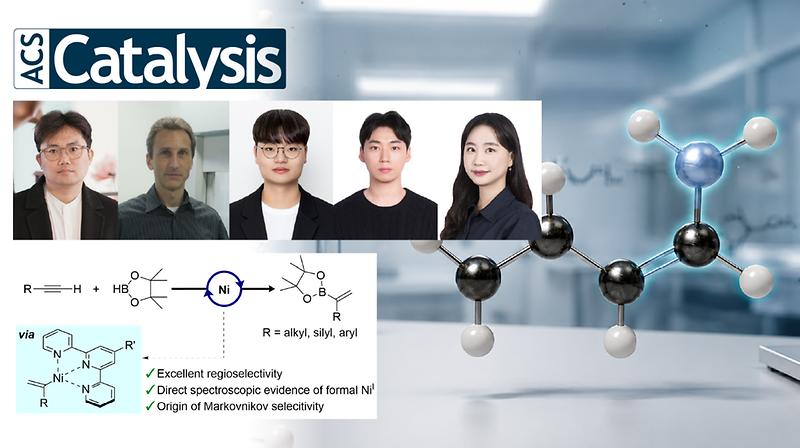
New Nickel-Catalyzed Method for Precise Attachment of Boron to AlkynesTheir findings have been published in ACS Catalysis on April 17, 2026.Abstract Nickel-catalyzed hydrofunctionalization reactions, including the hydroboration of alkynes, have been generally proposed to proceed via classical two-electron pathways or, alternatively, through a NiIH-based insertion mechanism. Despite efforts to discern these pathways, explicit spectroscopic observation of NiIH species and relevant mechanistic information on LNiI(alkenyl) species remain lacking. Herein, we provide experimental evidence of formal NiI intermediates, suggestive of a NiIH-based insertion mechanism for alkyne hydroboration. The formation of a NiI catalyst precursor, LnNiI(dpm) (dpm = dipivaloylmethanate anion) and an LnNi(alkenyl) intermediate was confirmed by EPR spectroscopy and HRMS analysis. Their involvement in the catalytic reaction was demonstrated by stoichiometric and catalytic reactivity studies. The origin of the counterintuitive Markovnikov selectivity in the formation of the α-alkenylboronate product was probed by systematic ligand electronic effect studies. Computational analyzes rationalize the selectivity by a kinetic preference for formation of the α regioisomer of the LnNi(alkenyl) intermediate through noncovalent interactions. Researchers at UNIST have introduced a new chemical methodology that employs cost-effective nickel catalysts to achieve site-selective boron addition within alkynes. This breakthrough significantly advances the precision of molecular modifications, with promising implications for pharmaceutical development and advanced material synthesis. Led by Professors Sung You Hong and Jan-Uwe Rohde from the Department of Chemistry, the team focused on terminal alkynes—molecules characterized by a triple bond at one end. Their innovative approach selectively activates and cleaves the triple bond, enabling boron atoms to be introduced internally, rather than at the terminal position. The resulting reactive intermediates can subsequently be transformed into a diverse array of functional compounds. The process involves the controlled cleavage of the alkyne's triple bond facilitated by nickel, which transiently binds to the substrate, directing boron attachment to the internal carbons. Once boron is installed, nickel is released, leaving a boron-containing moiety primed for further synthetic elaboration. This highly regioselective strategy broadens the scope for constructing complex molecular architectures with precision. Application of this methodology to modify various substrates—including derivatives of the anticancer agent bexarotene and analogs of pargiline—demonstrates its versatility and potential to streamline the synthesis of pharmaceutical compounds. By enabling targeted modifications, this technique could accelerate the development of new drug candidates and facilitate more efficient drug synthesis pathways. Central to the mechanistic understanding of the reaction was the detection and characterization of fleeting nickel intermediates, achieved through Electron Paramagnetic Resonance (EPR) spectroscopy and high-resolution mass spectrometry. Complementary computational studies elucidated the energetic and noncovalent interactions underlying boron's regioselectivity, providing valuable insights into the reaction's driving forces. First authors Jeong Woo Lee, Gun Ha Kim, and Seo Yeong Jeong played key roles in the research. Professor Rohde remarked, "The product of a catalytic reaction does not always reveal the route it took. By observing these short-lived nickel intermediates, we could connect the reaction pathway to the site where boron is added. That gives chemists a more direct basis for designing catalysts." Professor Hong emphasized the broader significance, noting “The value of nickel here is not only that it is abundant and inexpensive. It lets us control a difficult reaction at a specific site, turning simple alkynes into building blocks that can be used to make medicines and organic materials.” The study was published in ACS Catalysis on April 17, 2026, and supported by the Basic Science Research Program and the ERC Project (Engineering Research Center for Microplastic through Bio/Chemical engineering Convergence Process) funded by the National Research Foundation of Korea (NRF). Journal Reference Jeong Woo Lee, Gun Ha Kim, Seo Yeong Jeong, et al ., " Spectroscopic Evidence of a Reduced Alkenylnickel Intermediate in Catalytic Markovnikov-Selective Alkyne Hydroboration," ACS Catal., (2026).- 2026-06-23
- JooHyeon Heo
- 84
-
Research
Satellite and Climate Models Help Explain the Variability of Urban Heat Islands GloballyTheir findings have been published in Nature Communications on May 11, 2026.Abstract Urban morphology and background climate are evolving drivers of the urban heat island (UHI) effect, yet the thermal influence of surrounding urban structure and its coupling with climate remain elusive. Here, we show that climate and morphology jointly shape global urban heat. Using a six-class urban typology, long-term climatology, and machine learning, we quantify the thermal influence of surrounding urban structure and project future urban heat across 2,213 cities. We define a city-level thermal impact of the surrounding built environment (TBE) as the area-weighting UHI change induced by specific built-up types. Climatically, cold regions most frequently exhibit high daytime TBE, while arid regions dominate high nighttime TBE. Structurally, a universal pattern persists; high TBE corresponds to denser and taller forms, whereas sparser and lower types dominate low TBE during day and night. Future projections indicate that climate change dominates TBE change in 69% of cities, whereas the Global South exhibits stronger tendencies toward morphology-driven and synergistic intensification than the Global North. Our results highlight the need for locally tailored adaptation strategies that target the dominant drivers—climatic, morphological, or both. Urban Heat Islands (UHIs) are more than just a temperature difference—they emerge from the complex interplay between local climate and how cities are built. Recognizing this connection highlights the need for tailored solutions that address both environmental and structural factors. Professor Jungho Im from the Department of Civil, Urban, Earth, and Environmental Engineering at UNIST, in collaboration with Professor Cheolhee Yoo from the Department of Urban Planning and Engineering at Pusan National Universit (PNU), Seoul National University (SNU), and Pacific Northwest National Laboratory (PNNL) analyzed data from 2,213 cities worldwide. Using satellite imagery, machine learning, and climate models, they revealed that the intensity and patterns of UHIs depend heavily on regional climate and urban morphology. The phenomenon occurs as buildings, roads, and pavement absorb heat, altering airflow and trapping warmth. The study shows that in colder regions, UHIs tend to be most prominent during the day, driven by building heat absorption. In dry climates, the effect shifts to nighttime, when heat stored during the day is released, amplifying nighttime heat. Within the same climate zones, urban density and building height also influence the strength of UHIs: dense, high-rise areas retain more heat, while sparser, lower structures tend to moderate it. Using AI, the researchers divided cities into 1-kilometer grid cells. They analyzed how surrounding urban features and climate conditions contribute to local temperatures. Each cell was categorized into one of six urban types based on building density and height, considering both the immediate area and its surroundings. Looking ahead, the team projected future UHI trends under different climate and development scenarios. Climate change emerges as the main driver, worsening heat in nearly 70% of cities. Meanwhile, rapid urban growth in developing nations is expected to intensify UHIs, especially where dense, tall buildings become more common. Professor Im stresses that understanding urban heat requires integrating large-scale spatial data with AI tools. “Our findings show that effective strategies must be tailored to each city's climate and layout,” he said. “One-size-fits-all solutions don't work. We need approaches that reflect local conditions.” He further added, “Advanced data analysis helps us grasp how cities generate heat. This research will support policies on heatwave response, urban redevelopment, and protecting vulnerable areas.” The study was led by Siwoo Lee from UNIST and Professor Cheolhee Yoo of PNU, as co-first authors. Supported by the Ministry of Science and ICT (MSIT) and the National Research Foundation of Korea (NRF), the work was published in Nature Communications on May 11, 2026. Journal Reference Siwoo Lee, Cheolhee Yoo, Bokyung Son, et al. , “Global patterns of urban heat shaped by climate and morphology,” Nat. Commun. , (2026).- 2026-06-22
- JooHyeon Heo
- 102
-
Research
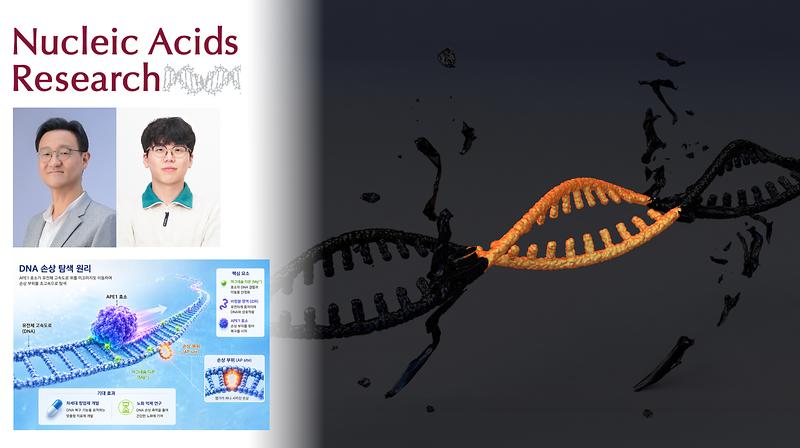
Unveiling the Mechanism of Ultra-Fast DNA Repair Unlocks New Possibilities in GeneticsTheir findings have been published in Nucleic Acids Research on May 14, 2026.Abstract Efficient recognition of DNA lesions such as apurinic/apyrimidinic (AP) sites is essential for maintaining genome stability. Apurinic/apyrimidinic endonuclease 1 (APE1) is the primary eukaryotic AP endonuclease, yet how it identifies rare lesions among vast stretches of undamaged DNA remains incompletely understood. Using single-molecule imaging combined with molecular dynamics simulations, we reveal that APE1 employs a distinctive dual mechanism to search DNA damage. First, Mg2+ coordination at the active site neutralizes clustered negative charges, stabilizing electrostatic contacts during scanning. Second, its N-terminal intrinsically disordered region (IDR)—a feature conserved only in eukaryotic homologs but absent in prokaryotic ExoIII—not only interacts with DNA through transient IDR contacts but also engages continuous interactions via the unprecedented Arg177 residue within the structured nuclease domain, thereby prolonging residence time and enabling long-range diffusion. Together, these two modules synergize to promote a sliding-based search strategy tailored to the complexity of eukaryotic genomes. Consistent with this model, IDR deletion restricts APE1 to 3D collisions, whereas IDR duplication enhances 1D scanning. Thus, APE1 exemplifies how structural disorder and metal-ion coordination integrates to enable long-range lesion recognition, highlighting an evolutionary innovation in eukaryotic DNA repair. A research team, affiliated with UNIST, has uncovered the molecular details behind how the DNA repair enzyme APE1 locates damaged sites within the genome with remarkable speed. Their findingsshed light on a sophisticated search mechanism that enables cells to maintain genetic stability. DNA is continually damaged by environmental factors and cellular processes. Among these, apurinic/apyrimidinic (AP) sites—where a base is missing—pose a serious threat if left unrepaired. Detecting these rare lesions within billions of undamaged bases is like searching for a needle in a haystack. To understand how the repair enzyme APE1 efficiently locataes these sites, Professor Ja Yil Lee from the Department of Biological Sciences, in collaboration with Professor Gwangrog Lee at KAIST and Professor Jejoong Yoo at Sungkyunkwan University (SKKU), conducted detailed research. They employed advanced single-molecule techniques—such as FRET assays and DNA curtain methods—along with molecular dynamics simulations to observe APE1's behavior in real time. Their findings show that APE1 does not scan DNA randomly. Instead, it slides along the strand in a one-dimensional manner, rapidly searching for damage. This sliding mechanism resembles a smart robot navigating a complex underground pipeline network, efficiently pinpointing leaks rather than wandering aimlessly. A key discovery involves APE1's flexible, disordered region—an intrinsically disordered segment that functions as a molecular hook. This region facilitates the enzyme's attachment to DNA during its search. Removal of this segment reduced APE1's damage-finding ability by more than fivefold. The study also highlights the role of magnesium ions (Mg²⁺). Beyond their known function as cofactors, magnesium ions stabilize APE1's interaction with DNA, enhancing its mobility and search efficiency. Professor Gwangrok Lee of KAIST remarked that these findings shed light on how flexible protein regions and metal ions work together to enable rapid damage detection, which could inform the development of new cancer therapies. Professor Ja Yil Lee added, “Understanding this mechanism opens new avenues for designing treatments that modulate DNA repair, with potential applications in cancer and aging.” Their findings have been published in Nucleic Acids Research on May 14, 2026. The study was supported by KAIST Grand Challenge 30 Project (KC30), the National Research Foundation of the Korea (NRF), the Institute for Basic Science (IBS), and the Institute of Information & communications Technology Planning & Evaluation (IITP). Journal Reference Donghun Lee, Subin Kim, Gyeongpil Jo, et al ., " APE1 coordinates its disordered region and metal cofactors to drive genome surveillance," NAR , (2026).- 2026-06-19
- JooHyeon Heo
- 1273
-
Research
Game-Changing Interface Coating Enables Scalable, High-Efficiency Perovskite/Silicon Solar CellsTheir findings have been published in Nature Photonics on June 1, 2026.Abstract Self-assembled monolayers (SAMs) represent an effective strategy for the development of perovskite solar cells (PSCs). High-performance PSCs are typically fabricated in an inert atmosphere because ambient moisture disrupts phosphonic-acid SAMs on transparent conductive oxides, leading to surface inhomogeneity and direct exposure of the transparent conductive oxide. However, this dependence on glovebox fabrication constraints scalability and cost-effective manufacturing. Here we present a ternary self-assembled molecular contact comprising glycerol dimethacrylate and 1-acetylguanidine that serves as a process-tolerant hole-selective contact. Glycerol dimethacrylate acts as a cosolvent during SAM deposition to improve film uniformity and is subsequently transformed into a hydrophilic binary network upon mild thermal curing, firmly anchoring the SAM to the substrate, whereas 1-acetylguanidine is incorporated to further suppress interfacial defects. Wide-bandgap PSCs fabricated in ambient conditions achieve a power conversion efficiency of 21.20% (1.00 cm2), with an open-circuit voltage of 1.28 V. When implemented in monolithic perovskite/silicon tandems, cells achieve a power conversion efficiency of 31.72% (certified 31.36%) and 32.60% for fabrication in ambient and inert conditions, respectively. These findings demonstrate that our tailored hole-selective contact provides a robust and process-tolerant interfacial engineering approach for high-efficiency perovskite and tandem photovoltaics manufactured under ambient conditions. UNIST, in collaboration with King Abdullah University of Science and Technology (KAUST), has developed a groundbreaking coating that unlocks large-scale, ambient-condition production of high-performance perovskite/silicon tandem solar cells. Led by Distinguished Professor Sang Il Seok of the School of Energy and Chemical Engineering and Professor Kyoung Jin Choi of the Department of Materials Science and Engineering, the team engineered a three-component interface layer that ensures uniform coverage and reduces defects during fabrication. This innovation allows the production of tandem cells outside of costly, sealed environments—an essential step toward commercialization. The resulting devices achieved a certified efficiency of 31.36%, with peak performance reaching 31.72%. Remarkably, they maintained over 92% of their initial efficiency after 600 hours in oxygen-rich, high-temperature conditions, and over 90% after 1,000 hours under continuous illumination—all without encapsulation. This technology not only delivers record efficiencies but also simplifies manufacturing, drastically reducing costs and enabling large-area production in standard environments. It paves the way for affordable, high-efficiency solar solutions that can be deployed at scale. The research team includes Gwisu Kim and Young Im Noh from UNIST, and Adi Prasetio from KAUST as first co-authors. The corresponding authors are Professors Sang Il Seok and Kyoung Jin Choi from UNIST, and Professor Stefaan De Wolf from KAUST. Contributions also came from researchers from the Chinese University of Hong Kong, Shenzhen (CUHKSZ) and Forschungszentrum Jülich GmbH (FZJ) in Germany. Professor Choi states, “Our findings align with the K-Moonshot Project, a national initiative focused on developing ultra-high-efficiency multi-junction solar cells, which brings us closer to realizing practical and affordable solar energy.” Professor Seok adds, “Demonstrating stability and high efficiency in open air indicates that the technology is ready for industrial-scale production.” Published in Nature Photonics on June 1, this breakthrough was supported by Hyundai Motor Company, the National Research Foundation of Korea (NRF), the Ministry of Science, and ICT (MSIT), the Korea Energy Technology Evaluation and Planning Agency (KETEP), and the Ministry of Trade, Industry and Energy (MOTIE). Journal Reference Gwisu Kim, Adi Prasetio, Young Im Noh, et al., “Ternary self-assembled molecular contact for ambient-processed perovskite/silicon tandem solar cells,” Nat. Photon. , (2026).- 2026-06-18
- JooHyeon Heo
- 1790
-
Research
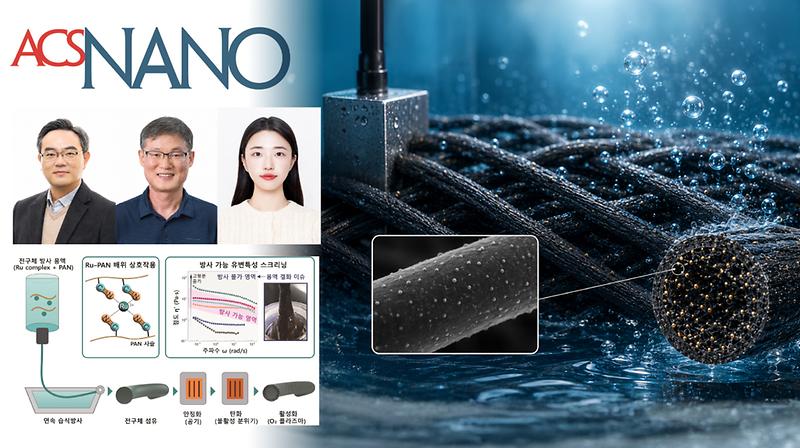
Roll-to-Roll Manufacturing of Ruthenium-Loaded Carbon Fiber Electrodes for Efficient Hydrogen ProductionThe findings of this research were published in ACS Nano (Impact Factor: 16.1, Cite Score: 24.2) on May 7, 2026.Abstract Carbon fiber-based electrocatalysts offer significant advantages over conventional powder catalysts, including enhanced active site exposure, superior conductivity, faster reaction rates, lower costs, and improved stability under harsh conditions. In this study, we introduce a rapid and scalable method for spinning carbon-supported metal catalysts into their fibrous forms to achieve uniform catalyst structures that enable roll-to-roll manufacturing. We demonstrate uniform ruthenium (Ru) nanoparticle-loaded carbon fibers by spinning polyacrylonitrile (PAN)-Ru phenanthroline complexes and annealing at 1200 °C for the optimum Ru particle size distribution. We found that the interaction of the Ru complex with the nitrile (−C≡N) group of PAN enabled rheological control and ensured monodisperse Ru confinement. Our investigation of the mechanism details the microstructural evolution during carbonization and oxygen plasma treatment, showing exceptional enhancement in the performance of Ru-embedded carbon fabric electrocatalysts. Ultimately, our rheology-driven spinning protocol bridges the gap between laboratory-scale synthesis and industrial manufacturing of fabric electrocatalysts, providing a versatile platform for nanoconfinement that offers critical insights into the structural evolution of metal–polymer nanocomposites for next-generation energy applications. A research team affiliated with UNIST has introduced a scalable process to produce long-lasting, fiber-shaped electrodes for water electrolysis, paving the way for large-scale hydrogen production. Professor Han Gi Chae of the Department of Materials Science and Engineering and Professor Jong-Beom Baek of the School of Energy and Chemical Engineering collaborated with Professor Cafer T. Yavuz at King Abdullah University of Science and Technology (KAUST). Traditional electrodes rely on coating catalysts onto conductive substrates, often using binders that block active surfaces. In contrast, these new fibers act as both support and conductor, allowing water and electrolytes to flow freely and hydrogen to escape efficiently. Central to this method is the embedding of ruthenium particles within the polymer fibers, resulting in improved catalyst dispersion and durability. By mixing a viscous polymer-Ru precursor and extruding it through a nozzle, the team produced continuous fibers. When heat-treated at 1200°C, these fibers develop a uniform distribution of catalytic nanoparticles inside and on the surface, preventing clumping and ensuring consistent activity. Achieving this required precise control over the interaction between the Ru precursor and the polymer. The researchers optimized the conditions to maintain even dispersion during fiber formation. They further enhanced the surface exposure of catalytic sites through oxygen plasma treatment, significantly improving performance and stability. Testing showed that these fibers could operate continuously for more than 170 hours at a high current density of 500 mA/cm² without degradation. Their catalytic activity surpassed that of conventional platinum electrodes, highlighting their potential for practical applications. The study was primarily led by Dr. Ga-Hyeun Lee from UNIST and Professor Seok-Jin Kim from KAUST, who served as the first authors, with researcher Inkyung Baek contributing as a co-author. This research offers new insights into the microstructural evolution of metal-polymer nanocomposites and demonstrates a scalable approach to fabricating fiber electrodes for efficient hydrogen production. Professor Chae noted, “Embedding metal catalysts uniformly within carbon fibers enhances electrode stability. This technique could extend beyond water electrolysis to other catalytic systems where durability and uniform reactivity are crucial.” The research was published in ACS Nano (Impact Factor: 16.1, Cite Score: 24.2)Impact Factor: 16.1, Cite Score: 24.2) on May 7, and supported by the Ministry of Science and ICT (MSIT), the Ministry of Education (MOE), and the National Research Foundation of Korea (NRF). Journal Reference Ga-Hyeun Lee, Seok-Jin Kim, Jung-Eun Lee , et al., “Rheological Pathways to a Scalable Ruthenium Nuclei-Anchored Carbon Fiber Catalyst,” ACS Nano, (2026).- 2026-06-17
- JooHyeon Heo
- 2041
-
Research
AI Recognizes 3D Objects from Natural Language in Five SecondsAccepted for CVPR 2026, LightSplat achieves 50× faster feature distillation and 64× lower memory usage for open-vocabulary 3D scene understanding.Abstract Open-vocabulary 3D scene understanding enables users to segment novel objects in complex 3D environments through natural language. However, existing approaches remain slow, memory-intensive, and overly complex due to iterative optimization and dense per-Gaussian feature assignments. To address this, we propose LightSplat, a fast and memory-efficient training-free framework that injects compact 2-byte semantic indices into 3D representations from multi-view images. By assigning semantic indices only to salient regions and managing them with a lightweight index-feature mapping, LightSplat eliminates costly feature optimization and storage overhead. We further ensure semantic consistency and efficient inference via single-step clustering that links geometrically and semantically related masks in 3D. We evaluate our method on LERF-OVS, ScanNet, and DL3DV-OVS across complex indoor-outdoor scenes. As a result, LightSplat achieves state-of-the-art performance with up to 50-400x speedup and 64x lower memory, enabling scalable language-driven 3D understanding. A research team affiliated with UNIST has introduced a new AI system capable of instantly recognizing objects within 3D environments based solely on natural language descriptions. Whether in augmented reality interfaces or robotic systems, users can effortlessly specify target items—such as white sofas or tea in a glass—and receive precise localization within seconds. This approach is robust across diverse queries, from object details to complex spatial semantics, enabling fast and scalable performance for real-world applications. Led by Professor Kyungdon Joo from the UNIST Graduate School of Artificial Intelligence, the team developed ' LightSplat ,' a method that drastically reduces the memory and processing power required for open-vocabulary 3D scene understanding. Unlike previous systems that relied on complex, slow optimization processes, LightSplat assigns compact 2-byte labels to key regions in the scene. These labels enable rapid identification of objects based on natural language inputs. Traditional recognition methods depend on predefined object categories—such as chairs or doors—which limits their flexibility. In contrast, LightSplat can understand and locate highly specific objects described in everyday language. This makes it ideal for applications requiring quick, intuitive interaction, including robotics, augmented reality, and digital twins. By storing minimal semantic information linked to selected points within the scene, LightSplat reduces memory usage by 98%. Its streamlined approach allows the system to find and highlight objects in real time, matching human language with 3D space in just five seconds—50 to 400 times faster than previous techniques. Testing on datasets such as LERF-OVS, DL3DV-OVS, and ScanNet demonstrated LightSplat's capability to identify objects of varying sizes and complexities—from small items like eggs and cups to large objects like cars and furniture. On the ScanNet dataset, it achieved a segmentation accuracy score of 37.11, confirming reliable recognition performance. First author Jaehun Bang explained, "Speed, accuracy, and efficient memory use are all critical. Our technology makes open-vocabulary 3D recognition viable for real-world applications." Professor Joo added, "This system could power robots that understand natural commands instantly, facilitate AR content creation through simple text-based object selection, and support digital twin environments that accurately and efficiently reflect real-world scenes." The research has been accepted for presentation at the 2026 Conference on Computer Vision and Pattern Recognition (CVPR) in Denver, Colorado, from June 3 to 5, 2026. It was supported by the Institute of Information & Communications Technology Planning & Evaluation (IITP) and the UNIST Graduate School of Artificial Intelligence. Additional support came from initiatives including the AI Star Fellowship Program, the LG AI STAR Talent Development Program for Leading Large-Scale Generative AI Models in the Physical AI Domain, and the InnoCORE program of the Ministry of Science and ICT (MSIT). Journal Reference Jaehun Bang, Jinhyeok Kim, Minji Kim, et al., "LightSplat: Fast and Memory-Efficient Open-Vocabulary 3D Scene Understanding in Five Seconds," 26' CVPR, (2026).- 2026-06-16
- JooHyeon Heo
- 1952
-
Research
UNIST Researchers Recognized for Data Distillation Excellence at ICLR 2026Professor Jae-Young Sim’s team has achieved a significant milestone with two papers accepted for presentation at the ICLR 2026.The research, conducted by Professor Jae-Young Sim and his team from the Graduate School of Artificial Intelligence at UNIST, has received notable recognition with two papers accepted for presentation at the International Conference on Learning Representations (ICLR) 2026—one of the most prestigious venues in machine learning research. Their work addresses one of the fundamental challenges in deploying artificial intelligence (AI) at scale: managing vast datasets—often comprising millions of images or extensive 3D scans—that demand enormous computational power and energy. To overcome this, the team developed advanced methods for dataset distillation, a process that synthesizes compact, highly representative datasets capable of training models effectively while dramatically reducing training time, computational costs, and energy consumption. ■ Advancing 3D Point Cloud Compression via Dataset Distillation A key challenge tackled by the team involves the compression of 3D point cloud data—crucial for applications such as autonomous vehicles and robotic perception. Unlike traditional images, point clouds are irregular and unordered, making them difficult to compress efficiently with conventional methods. Existing approaches often rely on storing a single high-resolution synthetic sample, which limits diversity and robustness within constrained memory budgets. To address this, Professor Sim and his team—comprising Dongwook Kim and Jae-Young Yim—developed a novel framework tailored specifically for 3D data. Instead of a single representative sample, the method employs multiple low-resolution anchor point clouds. These anchors are then smoothly transformed into a variety of synthetic shapes through a learnable shape-morphing mechanism, enabling the generation of diverse, high-quality 3D samples within a limited memory footprint. To preserve structural fidelity, the researchers introduced the Uniformity-Aware Matching Loss function, which maintains the geometric relationships inherent in the original data. Extensive evaluations across multiple benchmark datasets—including ModelNet10, ModelNet40, and ShapeNet—demonstrated that this approach surpasses existing methods, achieving remarkable accuracy even under severe compression. Notably, in the most constrained scenario—using only a single synthetic sample per class—the recognition accuracy increased from 35.9% to 87.7%, illustrating the method's efficiency and robustness. ■ Enabling Continual Learning through Dynamic Dataset Updating Beyond static data compression, the team addressed the challenge of continuous learning in dynamic environments—where new data continually arrives, and models must adapt without losing prior knowledge. Traditional dataset distillation approaches often require creating separate synthetic datasets for each new batch, leading to increased storage and computational costs. More critically, repeatedly updating a fixed synthetic dataset risks Catastrophic Forgetting , where previously learned information is overwritten. To tackle this, the researchers developed an Asymmetric Synthetic Data Update strategy. This innovative approach dynamically adjusts the influence of each synthetic sample during updates, allowing the dataset to incorporate new information while retaining past knowledge. A bi-level meta-learning framework automatically determines optimal per-sample update rates, balancing stability and plasticity. This enables the synthetic dataset to evolve continuously, effectively mitigating forgetting and maintaining high performance over time. Experimental results demonstrate that this method facilitates efficient lifelong learning within fixed storage capacities, making it highly suitable for real-world applications, such as autonomous vehicles, robotics, and edge devices. Professor Sim remarked, “Our work exemplifies how intelligent data synthesis and adaptive updating strategies can make AI systems more resource-efficient, scalable, and capable of lifelong learning. We believe these advancements will accelerate the deployment of smarter, more sustainable AI in diverse real-world environments.” The study was led by Minyoung Oh, serving as the first author.- 2026-06-11
- JooHyeon Heo
- 2210
-
Research
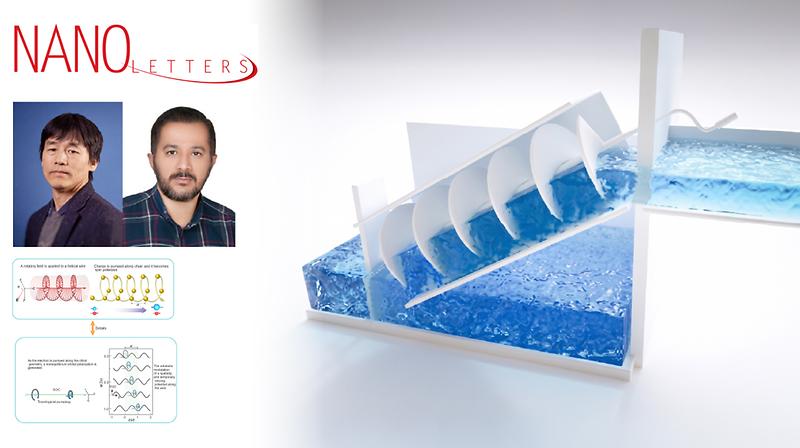
Spiral Nanowires Serve as Quantum Pumps for Quantized Electron TransportThe findings of this research have been published in Nano Letters on May 13, 2026.
Abstract Quantized charge pumping in one-dimensional chiral wires has been widely studied in the context of topological physics in (1 + 1)-dimensional synthetic space, yet the role of orbital and spin degrees of freedom remains largely unexplored. Here, we show that topological charge pumping in insulating chiral systems intrinsically generates orbital and spin polarization, providing a new perspective on spin-selective transport in chiral materials, often associated with chirality-induced spin selectivity. Using time-dependent Schrödinger dynamics of multiorbital tight-binding models driven by circularly polarized light, we identify two key results. First, the screw-like geometry enables a single-parameter topological charge pumping. Second, while the energy gap remains open throughout the pumping cycle, Berry phase driven dynamics induces nonequilibrium orbital polarization. Through spin–orbit coupling, this orbital response is partially converted into spin polarization. By analogy between synthetic (1 + 1)- and two-dimensional topological insulators, we suggest that nontrivial spin–orbital dynamics may accompany anomalous quantum charge Hall states. A new theoretical study has demonstrated that a spiral-shaped nanowire can function as a quantum pump—transferring electrons in precise, quantized amounts. This discovery reveals a novel approach to controlling charge flow at the nanoscale, grounded in the topological properties of the material. Led by Professor Noejung Park of the Department of Physics at UNIST, in collaboration with researchers at Pennsylvania State University, the team shows that a one-dimensional, screw-like chiral material can generate a topological charge pump. During this process, the system also produces orbital angular momentum and spin polarization, unveiling new connections between topology and quantum transport. The concept draws inspiration from the ancient Greek Archimedean screw, a device used to lift water through rotation. In the quantum realm, a similar structure—an electron traveling along a spiral nanowire—can induce directed charge flow by cyclically modulating its quantum states. Unlike conventional currents driven by voltage, this effect involves gradually varying system parameters to achieve a quantized transfer of electrons with each cycle, fundamentally linked to the topological nature of the material. First proposed by Nobel laureate David Thouless in 1983, topological charge pumping enables electrons to move in discrete steps without applying an external voltage. While this phenomenon has been realized in various engineered systems, the current work demonstrates that a simple modulation of the electric field's direction in a chiral nanowire is sufficient to produce quantized charge transport. This insight simplifies the pathway toward practical topological devices, eliminating the need for multiple control parameters previously deemed necessary. Using advanced time-dependent simulations of multiorbital models and density functional theory calculations, the researchers examined electrons in spiral hydrocarbons and selenium nanowires. They found that as electrons are pumped along the wire, orbital angular momentum becomes dynamically polarized. In selenium nanowires, a portion of this orbital polarization converts into spin polarization via spin-orbit coupling, establishing a topological mechanism akin to the chirality-induced spin selectivity (CISS) effect. Using advanced time-dependent simulations of multiorbital models and density functional theory calculations, the team examined electrons in spiral hydrocarbons and selenium nanowires. They observed that as electrons are pumped along the wire, orbital angular momentum becomes dynamically polarized. In selenium nanowires, part of this orbital polarization converts into spin polarization via spin-orbit coupling, creating a topological mechanism similar to the chirality-induced spin selectivity (CISS) effect. Professor Park notes, "This work shows that charge, orbital, and spin behaviors are interconnected through a topological process in chiral nanowires. It opens pathways to control these properties electrically at the nanoscale." Published in the May 2026 issue of Nano Letters , the study involved Dr. Esmaeil Taghizadeh Sisakht from UNIST. It was supported by the National Research Foundation of Korea (NRF), the Ministry of Science and ICT (MSIT), the Korea Institute for Advancement of Technology (KIAT), and the Ministry of Trade, Industry and Energy (MOTIE). Journal Reference Esmaeil Taghizadeh Sisakht, Uiseok Jeong, Xiao Jiang, et al ., “Spin and Orbital Angular Momentum Polarization in Thouless Topological Charge Pumping,” Nano Letters, (2026).- 2026-06-09
- JooHyeon Heo
- 3698
-
Research
New Study Unveils Precise Calibration Method for Event Cameras in Autonomous SystemsSelected as a Highlight of the 2026 CVPR, this study pushes forward the capabilities of high-speed sensing in dynamic environments.Abstract The conventional checkerboard-based calibration for standard cameras faces fundamental limitations when applied to bio-inspired event cameras. Specifically, this stems from two challenges: (i) Events are triggered asynchronously at different timestamps along motion trajectories. If we accumulate them directly on the image plane, it causes temporal misalignment and produces blurred edges. (ii) Checkerboard corners on event cameras show near-zero event occurrence at the corner itself. This hinders reliable corner localization and makes calibration difficult. To address these issues, we present a novel calibration framework that directly detects checkerboard corners from event data without learning-based grayscale image reconstruction. We first mathematically analyze the absence of events at corner points. Based on this fact, we then leverage edge-driven event cues to initialize corner positions. Using the nearzero event occurrence at checkerboard corners, we gradually refine the estimated corner toward low event-density regions, achieving sub-pixel accuracy. Furthermore, we extend the corner detection to fiducial markers such as AprilTag, resulting in reliable detection even under partial visibility or occlusion. Evaluations on self-collected and public data demonstrate reliable checkerboard corner detection and stable camera calibration. A research team affiliated with UNIST has introduced a new calibration technique for event cameras—an essential sensor for high-speed robotics and autonomous vehicles. Unlike conventional methods, this approach uses standard checkerboard patterns to calibrate the sensors directly from event data, eliminating the need for image reconstruction. Event cameras detect only changes in brightness at individual pixels, enabling rapid perception in challenging conditions, such as low light or fast motion. However, calibrating these sensors—particularly with common checkerboard targets—has been problematic because the key points at the intersections of black and white squares rarely produce detectable events. Led by Professor Kyungdon Joo from the UNIST Graduate School of Artificial Intelligence, the team developed a computer vision approach that bypasses this challenge. Instead of locating checkerboard corners directly within event data, the method first detects the pattern's boundary lines. It then identifies the corners as intersections where these lines meet and where minimal activity occurs—since brightness changes cancel out at intersections. This insight, grounded in the mathematical behavior of event signals, enables precise corner detection without converting event data into traditional images. The team also improved the clarity of the detected grid. Because event signals are recorded asynchronously across pixels, slight movements can cause the pattern to blur. Their technique aligns and refines these signals, reconstructing sharp grid lines and significantly enhancing calibration accuracy. Furthermore, the method extends to AprilTags—square fiducial markers similar to QR codes used for localization. It can identify and decode these tags solely from event data, even when some are partially obscured or outside the camera's field of view. First author Taehun Ryu explains, “Previous methods had to convert event data into grayscale images to find corners, which could introduce blurring and errors. Our approach directly extracts reference points from raw signals, greatly improving calibration precision.” Professor Joo highlights the broader significance, “Accurate camera calibration is fundamental to many vision systems. Our work paves the way for deploying event cameras in real-world robots and vehicles.” The study has been selected as a Highlight at the 2026 Conference on Computer Vision and Pattern Recognition (CVPR), scheduled for June 3–7 in Denver, USA. Only about 3.5% of submissions earn this recognition, which honors outstanding contributions to the field. The research was supported by the Institute of Information & Communications Technology Planning & Evaluation (IITP), the Ministry of Science and ICT (MSIT), the National Research Foundation of Korea (NRF), and UNIST's Graduate School of Artificial Intelligence. Additional support came from projects including the Development of AI Bots Collaboration Platform and Self-organizing and the Geometric and Physical Commonsense Reasoning based Behavior Intelligence for Embodied AI . Journal Reference Taehun Ryu, Changwoo Kang, and Kyungdon Joo, "From Corners to Fiducial Tags: Revisiting Checkerboard Calibration for Event Cameras," 26 CVPR, (2026).- 2026-06-08
- JooHyeon Heo
- 3924